

Is your body’s posture important when you meditate? Does it matter how you sit for meditation? Does it make a difference whether you are lying on a couch, somewhere between an upright and reclined position, or whether you are sitting on a chair or on a cushion on the floor?
Some of my teachers have said that there are no specific rules for the body’s position when you meditate. And some teachers have been adamant that you sit in an upright position, either on a cushion on the floor, or on a chair.
My belief is that you should be comfortable. However, I would recommend trying traditional postures if you are physically able and determining for yourself whether they are conducive to meditation or make no difference.
Why have I chosen to write on this topic?
My name is Dan Globus and I lead most meditations for The Compassion Center virtually. In these virtual meditations, I have an opportunity to see some of the participants who choose to leave their cameras on. What I have noticed, in some instances, is that there are people sitting on their couches in a posture that is somewhat between an upright posture and lying down. I wondered whether these people were ever taught traditional meditation postures and whether they would consider trying them to see if it affects their meditations.
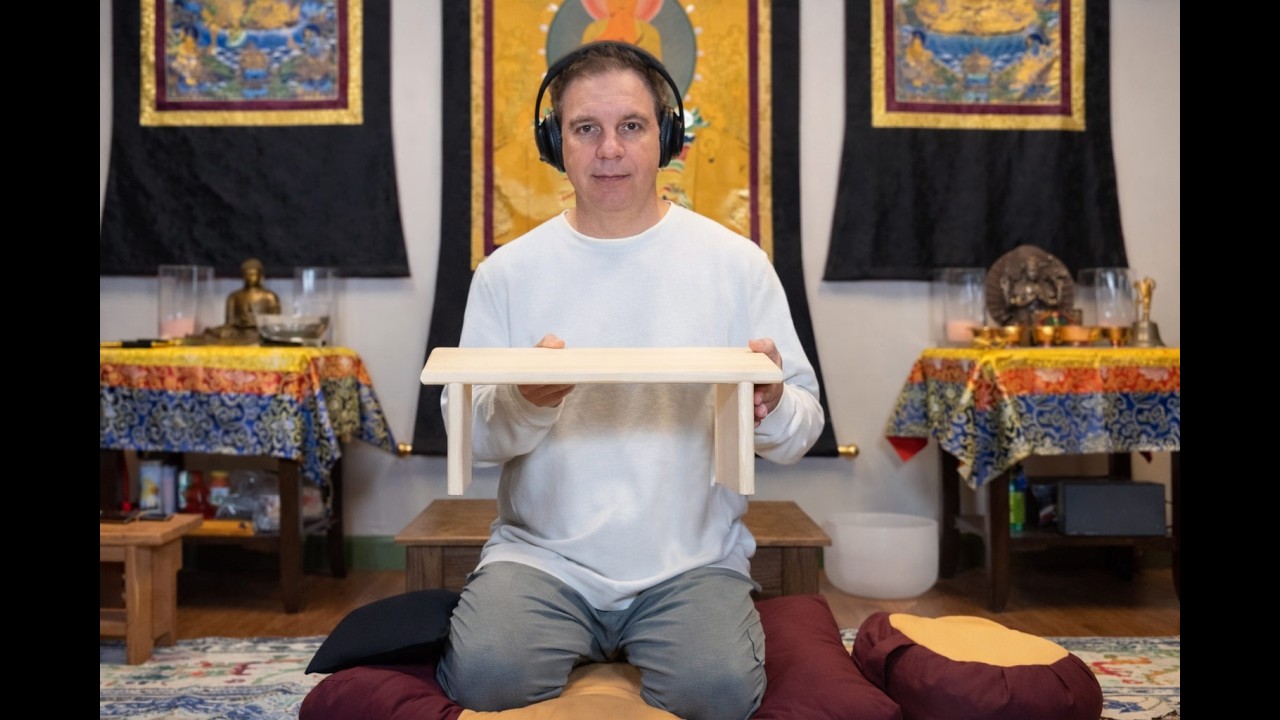
In my personal practice, I sit on a Zabuton (a traditional meditation cushion) and I use a Seiza bench (a bench that is used by some Zen practitioners) on top of the Zabuton. Many people sit cross-legged on a Zabuton, and they may use a Zafu to push their rear up to help them sit upright.
Why have I mixed a Seiza bench with a Zabuton? I discovered years ago that when I sit cross-legged on the floor, my knees are up very high. This is because my hips are very tight. It doesn’t take long for me to feel discomfort and ultimately pain when I am in a seated position on a Zabuton.
But when I sit on a Seiza bench, on top of a Zabuton, I am able to sit for up to 2 hours in a very still posture. And because the Seiza bench has a slope to it, it naturally brings my back into an upright posture.
Transitioning from Sitting on a Chair to a Meditation Cushion
When I started to practice the form of meditation that I now teach, I started by sitting on a chair. It was an Ikea chair that had me leaning back with two large cushions and a slight bend to the back. It was very comfortable.
As my meditation practice progressed, I noticed how many meditators sat on a meditation cushion in an upright position. And many also sat on a chair. However, when they sat on a chair, these were typically chairs with a straight backrest and most of these people did not sit against the backrest. They sat towards the front of the chair with an erect back.
I switched to a chair with a straight backrest and tried sitting on the edge of the chair with an upright back. I did not find this very comfortable and found myself slouching after not too long. So I decided to try sitting on a Zabuton with a Zafu.
I ended up ordering a Zabuton and Zafu set from Dharmacrafts.com. I loved the quality of these cushions and they made me feel like I was meditating like a pro.
Each time I sat on the Zabuton for my meditation practice, I felt that I was doing something very special. I felt very different compared to how I felt when I sat on the Ikea chair. I think, in hindsight, that I was sitting with more intention and purpose. I did not view sitting on the Ikea chair as sitting with intention and purpose. I felt that I was just sitting on a chair.
The Challenges of Sitting on a Meditation Cushion
It didn’t take long for me to notice that when I sat on my Zabuton and Zafu, I would progressively start to slouch until I caught myself. Then I would correct my posture and sit upright again. This disciplined me to sit upright and reminded me to be mindful of my posture.
As much as I loved my new sitting configuration, I was feeling discomfort and pain in my hips. And I also felt that I was constantly fighting to hold my back erect. I tried different ways to use the Zafu (as you will see in this video), but I still faced the same initial challenges.
I know that I am not alone. When I sit with other meditators, I can see how they struggle to sit for longer periods on cushions. Yet I see their commitment to sitting, and I applaud their commitment.
How Did I Overcome The Discomfort and Pain of Sitting in Meditation?
It was important for me to continue sitting on a cushion. The act of sitting on a cushion for meditation, versus sitting on a chair, was important to me. I developed a deeper commitment to the act of sitting in meditation. I saw the cushion as a special place to sit and be. I saw sitting on a cushion as a proclamation that I was doing something very special. It had more meaning to me than sitting on a chair. It was, as my first teacher said, the place where I ‘went to work…it was where I went to experience the magic’.
But how could I continue to sit on a Zabuton and overcome the discomfort and pain and also the inevitable slouching? This is when I discovered the Seiza bench. And I do not recall if I saw others using one and tried it or if I just went for it and ordered one from Dharmacrafts. Whichever route I took, I purchased a Seiza bench and have been sitting on it since.
Using a Seiza bench accomplished exactly what I needed it to do. It took away th discomfort I experienced in my hips and knees. It also enabled my back to be upright and I could maintain the upright posture for long periods of time.
I tried a portable Seiza bench, with folding legs, and I tried a Seiza bench with fixed legs. I ultimately preferred the fixed leg Seiza bench. It gave me more stability and allowed me to sit for much longer periods with having to adjust my body.
How to sit on a meditation cushion using a Seiza bench.
Is Sitting on a Meditation Cushion for Everybody?
Sitting on a meditation cushion is NOT for everybody. There are many people that need to sit on a chair. There are also many people who either need to lie down or they have a physical limitation, such as a injury, which forced them to lie down. The quality of the meditations experienced by people who use a chair or lie down may not differ from that experienced by people who use a meditation cushion.
My advice to anyone who wants to commit to a meditation practice is to try, if you are physically able to, to sit on a meditation cushion. But if you wll sit on a chair, try to sit on the edge of the chair with an upright back.
I have heard and read the stores from many monks about how they were trained by their teachers and how they had to endure sitting on wooden floors, without any meditation cushions, in an upright posture, for hours at a time. They explained how painful it was to do this. Yet they all did it because they were told to do so by their teachers.
In the West, many of these monks have become laypeople who teach and guide students in meditation. They do not force students to endure long hours of sitting on wood floors. They allow their students to sit on cushions, chairs, and to lie down. They talk about “comfort” as being absolutely essential.
Choose How You Wish to Sit
I created a video on How to Sit for Meditation Using a Seiza Bench and Zabuton. In this video, I also show people how to sit on a Zabuton using a Zafu and how you can use a Zafu in a different way to support your body. I encourage you to watch this video and consider whether you might want to try using a meditation cushion and a Seiza bench.
No matter how you sit, my final recommendations are the following…
Make sure that no matter how you sit, you sit in a clean area. The are should be free of clutter, free of dust and dirt, and the area should be viewed and treated with great respect. It is the place that you will go to make the “magic” happen. It will be the place that you look forward going to to find peace within your mind.
As some of you reading this will come to the weekly virtual meditation classes offered by The Compassion Center, and you may be viewing these classes on your work/home computer, my advice to you is to keep desk very clean, consider placing some inspirational pictures around or in front of you, and treat this space with the same reverence as you would treat any spiritual space.
Here are some different ways to sit in meditation.
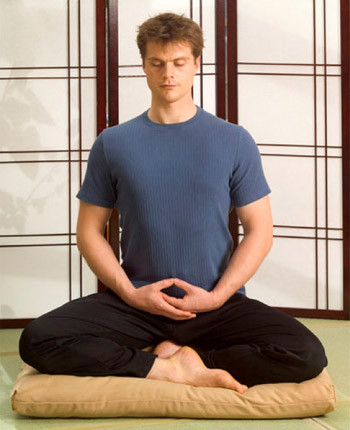
Cross Legged Sitting Position
When most people who are new to meditation think about how they will sit during meditation, they think of the cross legged sitting position. This is the most famous of all positions and the sitting position that is pictured most often in relationship to meditation. However, it is also a position that many people have difficulty getting into and maintaining for a prolonged period.
Sitting On a Chair for Meditation
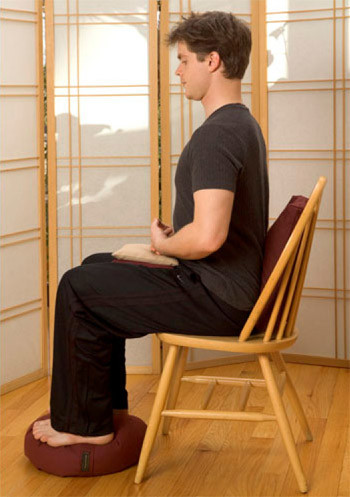
First-time meditators will be happy to know that using a chair to sit on while meditating is perfectly acceptable. The preferred way to sit on a chair for meditation is to sit on the edge of the chair (not with your back against the chair’s back support) and to sit erect. As sitting on the edge of a chair may be difficult for some, using a cushion between your back and the chair’s back support is perfectly acceptable.
Lying Flat on a Cushion
For those who cannot sit on a chair, lying flat on a cushion is also perfectly acceptable. As many people have lower back issues and cannot sit on a chair for prolonged periods, using a full-length Yoga cushion is a very viable way to get comfortable and meditate.
There are various props sold by places that sell Meditation and Yoga supplies. This includes kneeling benches and various types of cushions. If you have any physical challenges, please visit a website like DharmaCrafts to see what they can provide you to make meditation sessions as comfortable as possible.